

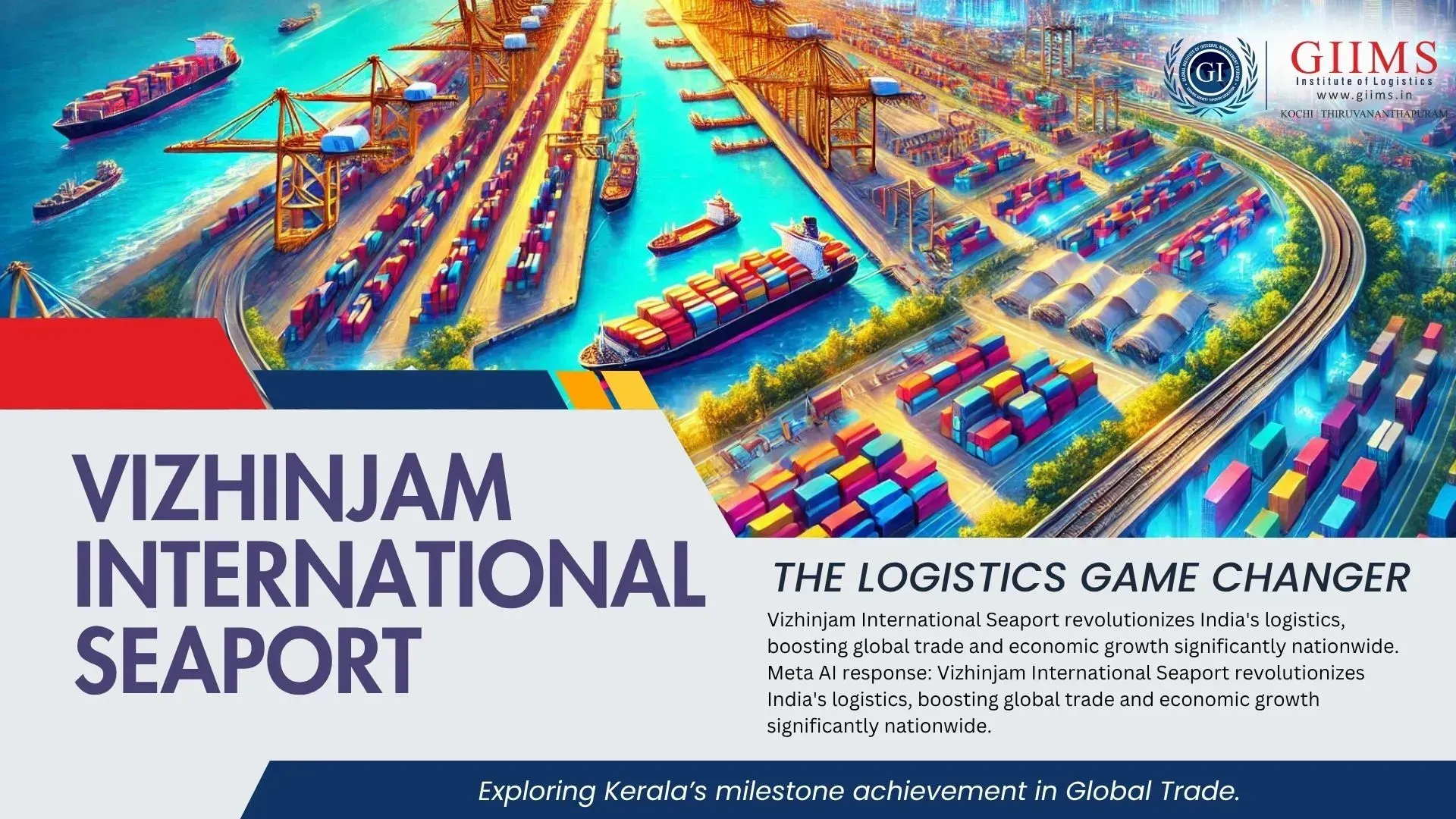
VIZHINJAM INTERNATIONAL SEAPORT: THE LOGISTICS GAME CHANGER
GIIMS Kerala

Exploring Kerala’s milestone achievement in Global Trade.


The Vizhinjam International Seaport has created a sea of opportunities in the logistics and supply chain sector. Vizhinjam being India’s first deep water container transshipment port, has significantly changed the course of Indian logistics. At present, the seaport stands as the top cargo handler in southern and eastern India, asserting its fair position in the global trade, logistics and supply chain activities.


VIZHINJAM: A New Chapter in Indian Logistics and Supply Chain


The Vizhinjam International Seaport is an ambitious project by the government of India, built on a public-private partnership model. It is India’s first deep water transshipment container port catering to bulk cargo and multipurpose container transshipments. The port’s strategic location near significant international sea routes makes it a vital player in global trade, facilitating smoother logistics throughout the east and west. The activities at the port surpasses those at major ports like Chennai, showcasing the growing importance of Kerala in the global trade and logistics tapestry.


The vision is to become the no.1 preferred transshipment gateway on the Indian subcontinent, in terms of operational excellence, sustainability, infrastructure and cutting-edge technology, that will eventually foster global trade and boost India’s economy. Also, the port’s rapid operational excellence and increased cargo handling capacity drives significant job creation in the logistics and supply chain sector. This creation of job opportunities will elevate the demand for skilled logistics professionals in diverse roles. And here comes the importance of logistics institutes offering practical, skill-based education in logistics and supply chain management.


A HUB FOR LOGISTICS PROFESSIONALS 


The activation of Vizhinjam Seaport will create a surge in excellent job opportunities in the field of logistics and supply chain management. Professionals with hands-on experience in fields like transportation, warehousing, port and terminal management, freight forwarding, customs clearance, logistics technology etc will be in high demand. 


Logistics being the backbone of global trade, skilled professionals with operational excellence is the need of the hour, to ensure the smooth flow of goods and services throughout the world. Hence, if you are planning to begin a career in logistics, then this is the right time. But investing in the right kind of skill-oriented education is utmost important. Being the best logistics and supply chain management institute in Kerala, GIIMS has been offering a comprehensive curriculum, helping out students to become the best logisticians in the industry for the past 10 years. Well-trained faculty, modern infrastructure, updated curriculum, practical skill-based education etc has been moulding students to become future ready in this ever-evolving world.


Join Kerala’s no.1 logistics institution and begin a rewarding career in the logistics and supply chain sector.


Book your seats today!

Shipping and Logistics Courses: Career & Fees Guide 2026

Which Shipping and Logistics Courses Are Best for Freight and Cargo Careers?

Shipping and logistics courses prepare students for careers in freight, cargo handling, and global transportation management. The best programs offer hands-on shipping operations training, industry certifications, and strong placement support. Choosing the right course helps learners gain job-ready skills and secure roles in shipping, freight forwarding, and cargo logistics management sectors.

What Are Shipping and Logistics Courses and Why Are They Important?

Shipping and logistics courses focus on managing cargo movement, freight operations, and global shipping processes. These programs teach students how goods move across ports, warehouses, and distribution centers using modern logistics systems.

In today's global trade environment, shipping professionals play a key role in maintaining smooth cargo movement. Businesses rely on trained logistics professionals to ensure timely deliveries, reduce operational costs, and maintain compliance with international shipping regulations.

What Topics Are Covered in Freight Management Courses?

Freight management courses cover both operational and analytical aspects of shipping and cargo movement. These programs focus on the end-to-end process of moving goods safely and efficiently.

Core Modules in Cargo Logistics Management

Typical subjects include:

  • Shipping documentation and customs clearance
  • Cargo handling and packaging methods
  • Freight forwarding operations
  • Warehouse and inventory management
  • Port and terminal operations
  • Transportation management systems

These modules ensure learners understand how cargo moves through complex logistics networks and how to manage shipping operations effectively.

What Skills Will You Gain from Shipping Management Training?

Shipping management training focuses on developing operational, technical, and decision-making skills. These abilities help professionals handle real-world logistics challenges across domestic and international shipping environments.

Technical Skills Developed

Students typically learn:

  • Cargo handling procedures
  • Freight rate calculations
  • Shipping documentation management
  • Logistics software and ERP usage
  • Inventory tracking and reporting
  • Route planning and scheduling

These technical competencies allow professionals to manage shipping workflows accurately and efficiently.

Managerial Skills Developed

Along with technical skills, learners also build:

  • Communication and coordination skills
  • Vendor and carrier negotiation abilities
  • Risk management techniques
  • Time management and scheduling
  • Cost control and budgeting skills

Such managerial abilities help professionals supervise cargo operations and maintain efficient logistics workflows.

Who Should Enroll in Shipping and Logistics Courses?

Shipping and logistics courses are suitable for individuals looking to enter the fast-growing freight and cargo industry. The programs are designed for beginners and professionals who want to enhance their logistics knowledge.

Ideal Candidates Include

  • Fresh graduates seeking logistics careers
  • Warehouse and cargo handlers
  • Freight forwarding professionals
  • Entrepreneurs managing logistics businesses
  • Operations executives in supply chain roles

Students exploring logistics courses in Kochi often prefer specialized freight and shipping programs because of the increasing demand for trained logistics professionals in port-based regions.

How to Choose the Best Freight Management Course?

Selecting the right freight management courses requires careful evaluation of course structure, industry exposure, and placement opportunities. A well-designed course improves learning outcomes and career readiness.

Key Factors to Consider

When choosing a course, look for:

  1. Industry-aligned curriculum
  2. Practical training sessions
  3. Internship opportunities
  4. Experienced faculty support
  5. Placement assistance
  6. Industry-recognized certifications

You can explore comprehensive program details through this shipping and logistics courses learning pathway connected to the primary pillar page.

What Makes Faculty Expertise Critical in Cargo Logistics Management Training?

Faculty expertise significantly influences the quality of learning and career readiness. Experienced instructors share real-world insights that cannot be gained through theory alone.

Typical Faculty Qualifications

High-quality programs feature instructors with:

  • 10–20+ years of industry experience
  • Expertise in freight forwarding operations
  • Professional certifications in logistics and supply chain
  • Hands-on knowledge of port operations
  • Experience working with multinational logistics companies

Learning from industry experts helps students understand real shipping scenarios and industry challenges.

How Do Placement Partnerships Improve Career Outcomes?

Placement partnerships help students transition from training to employment. Institutions with strong corporate ties provide better job opportunities and industry exposure.

Placement Support Services

Most professional institutes offer:

  • Internship placement assistance
  • Resume and interview preparation
  • Industry networking events
  • Corporate recruitment drives
  • Career counseling sessions

These services improve employability and prepare students for real-world job expectations.

Student Success and Career Outcomes

Graduates from shipping programs often secure roles such as:

  • Freight Coordinator
  • Shipping Executive
  • Cargo Operations Officer
  • Warehouse Supervisor
  • Logistics Coordinator

Many students who pursue programs such as PG Diploma in Logistics Management or Advanced Diploma Logistics Course achieve stable career growth within the logistics industry.

What Industry Collaborations Strengthen Shipping Management Training?

Industry collaborations play a crucial role in enhancing learning quality and professional exposure. Programs connected to industry partners offer practical knowledge and hands-on learning opportunities.

Types of Industry Partnerships

Typical collaborations include:

  • Shipping and freight companies
  • Cargo handling agencies
  • Port authorities
  • Logistics technology providers
  • Customs brokerage firms

These partnerships help students gain practical exposure to real logistics environments.

What Career Opportunities Are Available After Completing Shipping and Logistics Courses?

The demand for skilled shipping professionals continues to rise due to increasing global trade and e-commerce growth. Businesses require trained professionals to manage cargo movement efficiently.

Popular Career Roles

Graduates may pursue roles such as:

  • Shipping Executive
  • Freight Forwarding Officer
  • Logistics Coordinator
  • Cargo Supervisor
  • Import–Export Executive
  • Warehouse Operations Manager

These roles exist across industries such as manufacturing, retail, shipping, and international trade.

Salary Expectations in Shipping Careers

Typical salary ranges include:

  • Entry-Level: ₹2.5–5 LPA
  • Mid-Level: ₹5–10 LPA
  • Senior-Level: ₹10–18+ LPA

Professionals completing supply chain management training in Kerala often benefit from increasing logistics infrastructure and employment opportunities.

Why Consider Shipping and Logistics Courses in Port-Based Regions?

Port-based regions provide excellent learning environments due to direct exposure to cargo handling operations. Students benefit from observing real shipping processes and understanding industry workflows.

These regions also provide opportunities for internships and entry-level employment in shipping companies. Access to logistics hubs enhances learning and career readiness.

Ready to Start Your Career in Shipping and Freight Management?

Take the next step toward building a successful career in shipping and logistics. Gain practical skills, industry certifications, and placement support through professional training programs designed for modern logistics careers.

Apply now to secure your seat in a career-focused logistics program and start building your future in freight and cargo management today.

Frequently Asked Questions About Shipping and Logistics Courses

What is the duration of freight management courses?

Most freight management courses last between 6 months and 2 years, depending on course depth and certification level. Short-term programs focus on foundational skills, while advanced diplomas offer specialized training.

Are shipping and logistics courses suitable for beginners?

Yes, many shipping management training programs are designed for beginners. They start with basic logistics concepts and gradually introduce advanced topics such as cargo operations and freight management.

What tools are used in cargo logistics management?

Common tools include:

  • ERP systems
  • Warehouse management systems
  • Transportation management software
  • Inventory tracking tools

These technologies help professionals manage shipping operations efficiently.

What jobs can I get after completing shipping management training?

Graduates can work as shipping executives, freight coordinators, warehouse supervisors, and logistics planners across various industries.

Is shipping a good career choice in 2026?

Yes, shipping remains a high-demand career field due to global trade expansion. Completing shipping and logistics courses improves job readiness and increases employment opportunities.